
On this page
Strengths and limits
What stands out
Fee-based referral model, link and code options, and account reporting.
Things to consider
Eligible activity is necessary; standard referrals and partner campaigns use different terms.
Program terms
Standard linked rules describe 20% of eligible net fees, a 10% customer rebate for 60 days, and next-day USDT credits. Verify the offer accepted in your account.
Our review
At a glance
- Standard documented offer: 20% of eligible net trading fees for the referrer.
- Customer benefit: 10% fee rebate for 60 days under the documented standard offer.
- Documented credit: USDT credited the following day.
- Separate partner offer: Space Traveller advertises up to 60%; it is not the standard rate.
- Audience: Crypto communities and publishers helping readers compare exchanges.
Poloniex referral earnings come from eligible trading fees paid by referred users. That makes the program relevant to crypto publishers whose readers are comparing exchanges and how they work. We like the connection to measurable platform activity. Opening accounts without eligible trading does not produce the same result, and a deposit is not the commission base.
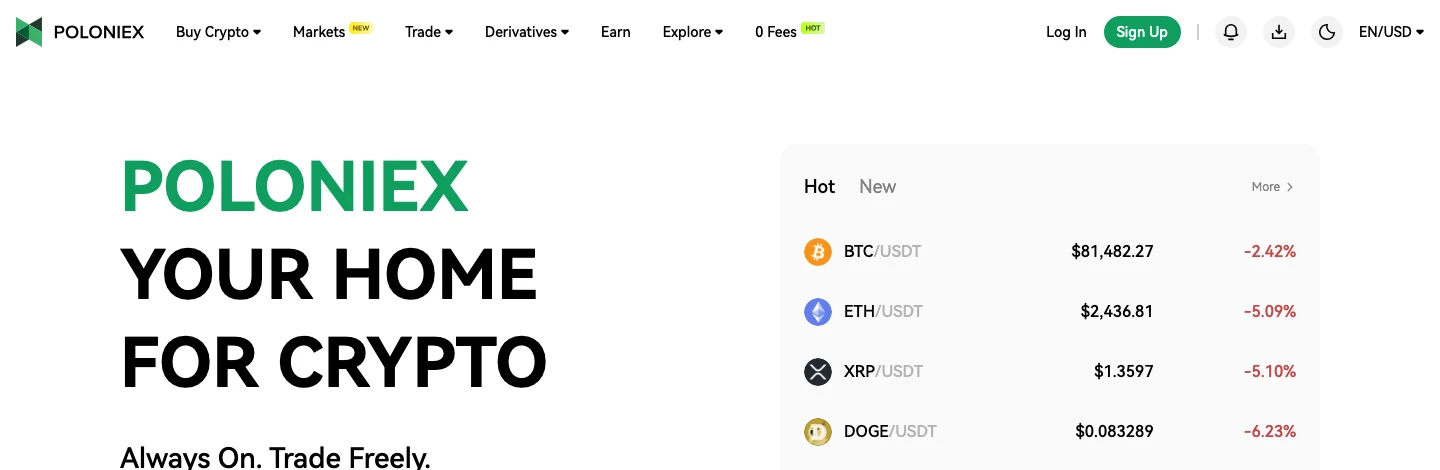
Start with fees, not deposits
A percentage looks attractive only when you understand what it applies to. Hypothetical example: 200 USDT in eligible net fees would produce 40 USDT at a 20% referral rate. A deposit of 200 USDT would not. We would judge this program by attributed fee activity and the applicable products, rather than the raw number of people who enter a referral code. That also keeps the review focused on choosing a service instead of encouraging readers to trade more for the publisher’s benefit.
The rebate and your commission are different
The standard rules linked from the current referral page describe a 20% referrer share and a separate 10% customer rebate lasting 60 days. They should not be added together and advertised as a 30% referrer commission. Those rules describe the referrer share without a fixed time limit. Fee coupons, trial funds, and some zero-fee transactions are excluded. As a result, trading volume alone is a poor shortcut for estimating earnings: the relevant figure is the fee base that qualifies.
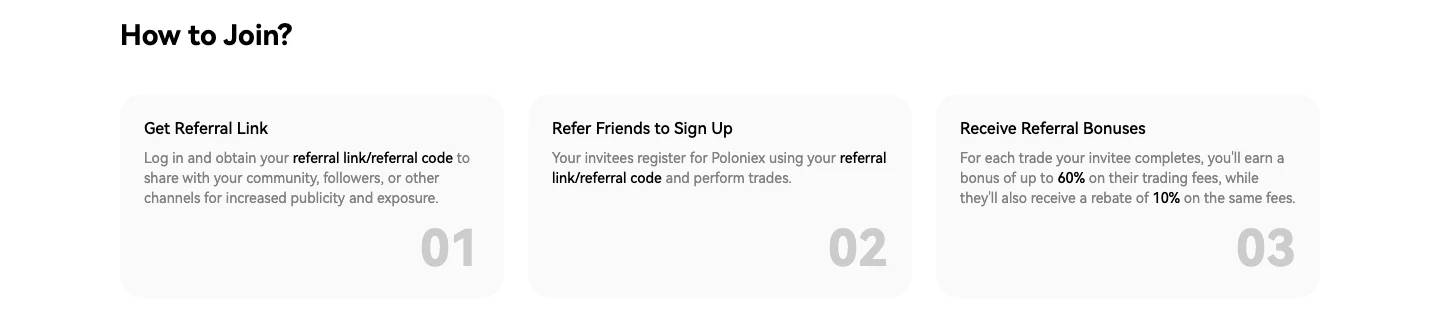
Use the Referral Center to understand attribution
Poloniex provides a referral link, a code, and sharing materials through its referral tools. A link can carry the attribution into registration; a code needs to be entered correctly. For a publisher, the practical benefit is being able to explain both the service and how the reader’s registration is associated with the recommendation. A useful exchange comparison can cover fees and product access without turning the entire article into a temporary promotion. Account credits also need to be distinguished from withdrawing funds off the platform.
Do not confuse the standard offer with Space Traveller
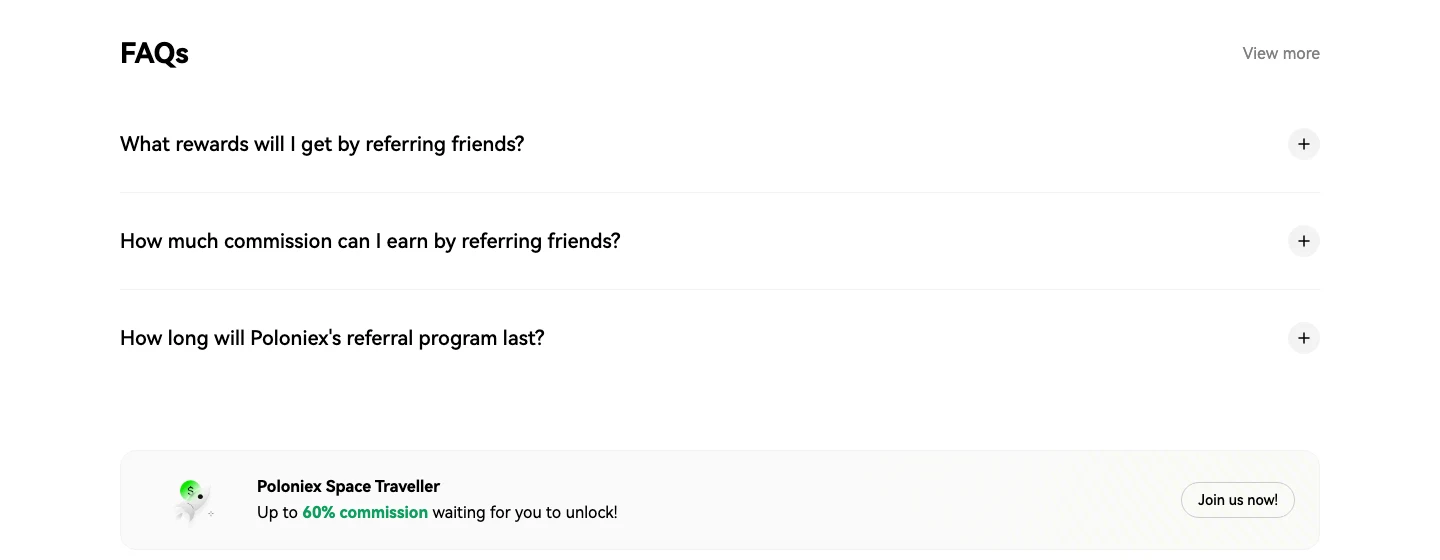
The live referral page also advertises Space Traveller, with a maximum of 60%. That is a separate partner opportunity to assess, not a rate every referrer automatically receives. The standard rules currently linked by Poloniex date from 2022, and other announcements describe different campaigns. Check the accepted offer in your account before relying on a rate, product list, or market eligibility. We would rather explain the program that actually applies to the publisher than lead with the highest number from an announcement.
When we would consider Poloniex
This is a reasonable option for a project that already covers crypto exchanges and can explain the platform’s use and limitations. The earnings model depends on eligible activity, so audience relevance matters more than broad curiosity about crypto. We would include it in a comparison where the service has a clear place. We would not turn recurring referral commissions into a reason to promote excessive trading or imply that the reader’s profit and the affiliate’s income move together.
The standard referral and professional affiliate paths require more than a rate comparison. The KuCoin and Binance reviews offer two other examples of that distinction in crypto partnerships.
Public information checked October 7, 2026. Your accepted agreement determines the applicable terms.